



5 Benefits of Outsourcing Book-Keeping

A business, irrespective of its size, has multiple departments. Further, many businesses, startups and entrepreneurs find it challenging to manage their account departments and cope with their regular book-keeping needs.

It doesn’t take long for a new entrepreneur to understand that accurate and up-to-date financial records play an important role in the success of a business. However, the daily tasks required to maintain these records often fall to the bottom of an entrepreneur’s to-do list.

Hiring and managing an accountant is a tedious, time-consuming and an expensive process. Above all, it has become more and more difficult to find a qualified accountant and eligible person at an affordable rate. However, there is a simpler solution to this problem – Outsourcing Book-keeping. Here are 5 reasons why outsourcing book-keeping is beneficial for your business:

Reduces Cost upto 80%

Outsourcing book-keeping means not only reducing cost considerably but also improving quality. Consequently, book-keeping can be outsourced to skilled professionals at highly affordable rates which is very low compared to hiring an inhouse accountant. Firstly, recurring cost of an inhouse accountant is costly to maintain. Secondly, not every entrepreneur can afford the luxury of an accountant. Thirdly, and the most importantly, the cost of training and managing an inhouse accountant is huge. In conclusion, outsourcing book-keeping is a multi-faceted means of saving cost.
“If you would be wealthy, think of saving as well as getting.” Benjamin Franklin

Saves Time

As you grow your business, you will feel the need to spend more time in expanding your business than managing your books. Hence, outsourcing administrative tasks like book-keeping helps you focus your time, energy and resources on sales, networking, marketing and other revenue driven departments.
"The bad news is time flies. The good news is you're the pilot." Michael Altshuler

Professional Expertise

We have already understood that outsourcing administrative tasks such as book-keeping reduces your costs and saves time. However, along with such benefits, the quality of the services received is increased significantly. Outsourcing your book-keeping to professionals will ensure accuracy and completeness. Along, with the correctness of your accounts, you will not have to worry about the lapses in various technical and legal compliance required by various statutory bodies. In short, You get your financials tax and audit ready.
“I hire people brighter than me and then I get out of their way” — Lee Lacocca, Ford

Easy Scaling of Resources

As you grow your business, you might require to deploy additional resources to manage your administrative tasks. Extra workforce is readily available with professionals who undertake outsourcing. This gives you the flexibility of scaling your resources without going through the rigorous hassles of hiring, monitoring, maintaining and training.
“Growth is never by mere chance; it is the result of forces working together.” — James Cash Penney
Remaining updated with Technology

Professionals these days use cloud based softwares which are extremely secure and robust. Consequently, most of the professionals remain updated with the updates in technology in accounting and book-keeping. The use of these softwares have ensured readiness and availability at the click of a button. Hence, your books of accounts are readily available for you to view and monitor. This way, you are not oblivious of your financial status and are always ready with updated numbers, as and when required.
“It’s not that we use technology, we live technology.” — Godfrey Reggio
Whether a business needs current financial figures to present to a banker or to just keep tabs on cash flow, keeping up to date on accounting tasks is essential.

There are significant advantages for clients who decide to outsource their accounting tasks. To begin with, cost-efficiency and having flexibility of contracts or scaling of functions are just the tip of the iceberg.

Accounting and bookkeeping are a vital part of business, but also complex. Likewise, it requires time and expert knowledge. Without accounting experience, many errors are bound to occur, potentially, leading to a decrease in your business.

Rekhani and Saraogi, Chartered Accountants, is a leading accountancy, audit and consultancy firm in India with a large team of skilled accountants supervised by our team of experts. We cater many large and small organizations, ranging from established companies to a home based single person start-up, in various sectors. Backed up by experience, skill and vision, we are committed to provide best services to our client and we make sure our commitment leads to your satisfaction.

Interested in finding out more about how you can outsource your bookkeeping? Contact us for more information!

“If you deprive yourself of outsourcing and your competitors do not, you’re putting yourself out of business.” — Lee Kuan Yew, Former Prime Minister of Singapore

“The important thing about outsourcing or global sourcing is that it becomes a very powerful tool to leverage talent, improve productivity and reduce work cycles.” — Azim Premji, Chairman of Wipro Limited

All you need to know about Tax Collected at Source (TCS) u/s 206C(1H) of the Income Tax Act, 1961

A lot of our clients have asked us doubts / queries pertaining to TCS u/s 206C(1H) which has been made effective from 1st October, 2020.

We have prepared a short video on the basis of our knowledge and the queries received comprising of certain Frequently Asked Questions (FAQs).

We hope that the video is helpful and we are able to solve all your queries.

Please note that the video is entirely for educational / academic purpose. This should not be constituted as legal or professional advice. No legal action should be taken on the basis of this video.

Why Digitization, Risk Assessment and IT Audit?

Background

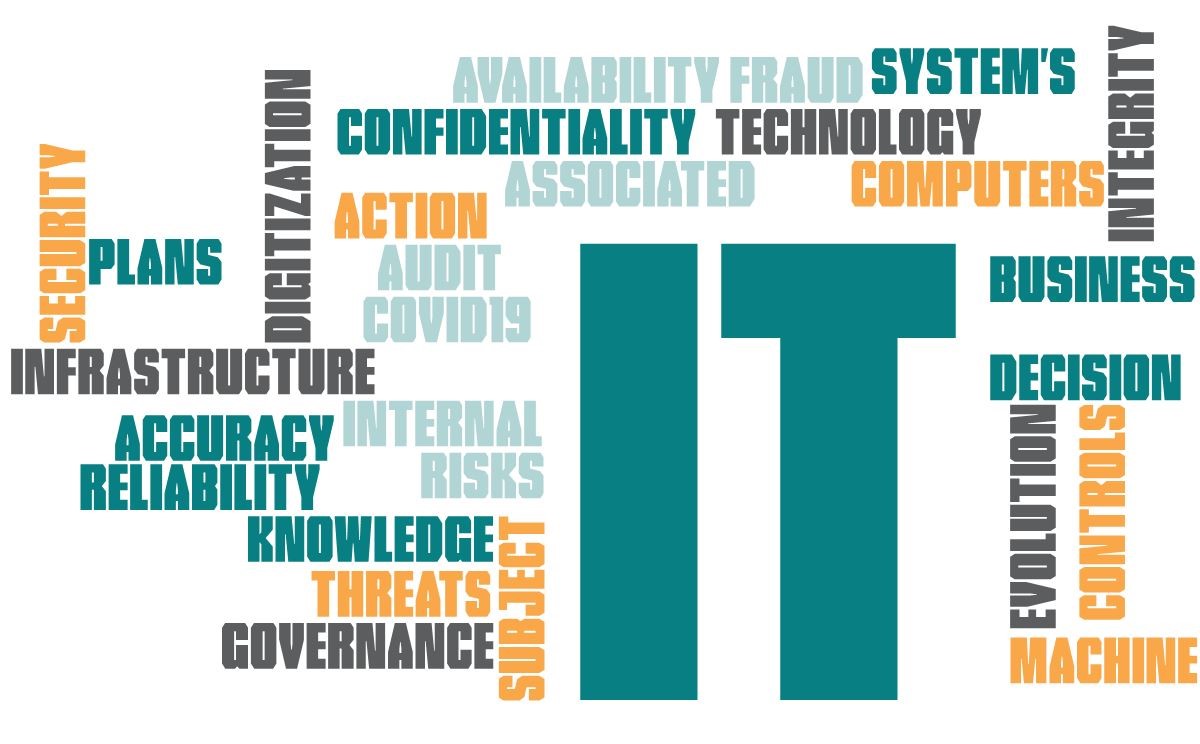
Earlier, computers were merely used for storing records. But now, they have become a backbone of the decision-making process of a business. We know that the use of technology has made business more efficient. Yet, we cannot undermine the fact that the associated risks have also evolved with the evolution of technology. This emphasizes the need to implement internal controls in the IT infrastructure of business to avoid/mitigate/reduce/accept risks. Normally, people focus on human-prone manual risks. But they tend to ignore the IT infrastructure level risks, some of which even a person with limited knowledge can exploit.

This article discusses wide array of subjects including some practical scenarios of fraud in an IT infrastructure, influence of COVID-19 towards digitization, importance of risk assessment and IT System’s Audit. The language of the article is kept simple for general audience to relate and understand.

Scenarios

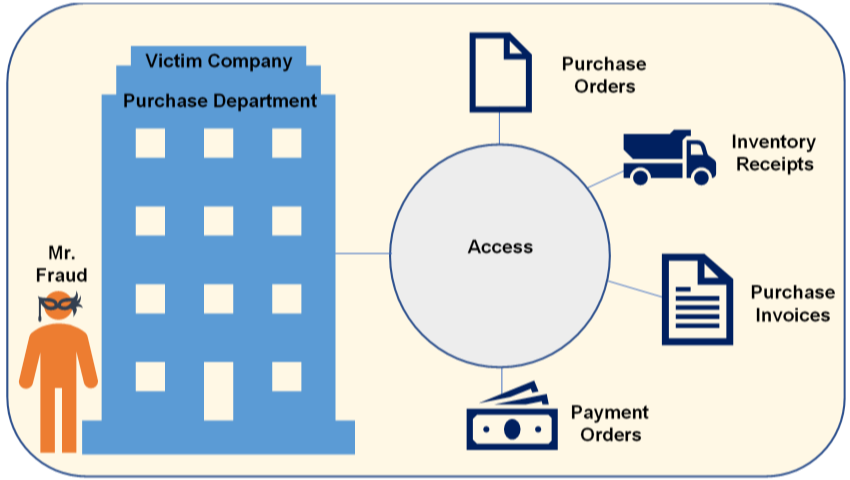
Let us assume different scenarios wherein a fraudster, say Mr. Fraud, could try and circumvent the IT infrastructure. We will also discuss a potential solution that an entity could implement to counter Mr. Fraud’s notorious intentions.

Assume Mr. Fraud has recently joined the purchase department of Victim Company. He, out of his old die-hard habits, decides to fiddles around with the existing IT controls.

#

Attempts

Potential Solutions

1

Mr. Fraud realises that he is able to access the vendor master. Also, he is able to create and modify records in the vendor master. Mr. Fraud creates a fictitious vendor ‘The Fraud Enterprises’ in the system.

Restrict access of vendor master to authorized personnel only.

Segregate duties of people based on access to create/modify a vendor.

Additionally, implement a maker-checker control whereby another person has to approve the vendor. A maker-checker control is a control where a different person has to approve a transaction performed by one person to process.

2

Let’s assume a case where Mr. Fraud could not create a vendor but was able to create a purchase order for ‘The Fraud Enterprises’. The system allowed creating purchase orders for suppliers not defined in the vendor master.

Restrict purchases, receipts and invoices to suppliers defined in the vendor master and for goods and services defined in the item master.

Additionally, restrict creating/modifying purchase orders for value of goods and services above the rates defined in the item master.

3

Mr. Fraud makes an under the table deal with a supplier – Mr. Opportunist and creates a fictitious purchase order in his name.

Restrict access of transactions to create/modify purchase orders to authorized personnel only.

4

Mr. Fraud performs a fictitious inventory receipt from Mr. Opportunist.

Map Goods Receipt transactions with open Purchase Orders to restrict over-receipt of goods.

Segregate duties of people who have access to create/modify Purchase Orders and people who have access to create/modify Inventory Receipts.

Define an upper tolerance limit for restricting receipt of goods above a certain level from the quantity mentioned in the respective purchase order.

5

Mr. Fraud books a fictitious purchase invoice from Mr. Opportunist.

Map Purchase Invoice transactions with un-booked goods receipts and open Purchase Orders to restrict over invoicing at quantity and amount level.

Segregate duties of people who have access to create/modify Purchase Orders, people who have access to create/modify Inventory Receipts and people who have access to create/modify Invoices.

6

Mr. Fraud books a fictitious purchase invoice from Mr. Opportunist and makes a payment order.

Restrict access of payment orders to authorized personnel only.

Segregate duties of people with access to create/modify invoice and people with access to create/modify payment orders.

Additionally, implement a maker-checker control where another person has to approve the payment order.

The above instances are simply illustrative and the scope of the fraud and controls are extremely broad. We have just seen the tip of the giant iceberg hidden underneath the sea.

The controls discussed in the above illustrations are known as application controls. It includes completeness and validity checks, identification, authentication, authorization, input controls, and forensic controls, among others.

Impact of COVID-19 pandemic

The situation created by the COVID-19 pandemic has been an eye-opener for many business entities. And, by now, they must have realized the importance of digitization. It is time for people who were averse of technology to embrace it but with caution. A strong IT Infrastructure is definitely a roadmap to a very successful future. A question which everyone should ponder is – What is your strategy during the crisis, right after the crisis and for the new normal?

Need of the hour

Embracing new technology is the roadmap to transform business models, drive growth and improve efficiency. The business processes and controls, though efficient and effective today, may be completely obsolete tomorrow.

Yet, we must also realize the risks which come along with digitization, as discussed earlier. But, one can avoid many risks simply by implementing commonly known best-practices. To survive and thrive, learning from the past while looking at the future should form the base of risk management. The risk assessment should include all categories of risk and should be enterprise-wide. Additionally, in light of the face past change of technology, one must update the controls regularly as well.

Conclusion

It has become incumbent for business to ensure security of their IT infrastructures and ensure the confidentiality, integrity and availability of the application and its associated data.

This has increased the importance of IT System’s Audit. The role of an IT auditor is unknown to most but it impacts the lives of all. It adds security, reliability and accuracy to the IT infrastructure of the business. The role of an IT auditor is extremely dynamic which includes identifying the weakness in the IT infrastructure and creating an action plans to prevent the threats before they materialize.

The need for audit of Information Systems can be highlighted as under:

  • High Cost of Incorrect Decision Making: Management and operational controls taken by managers involve detection, investigations and correction of the processes. An independent third-party review can ensure accurate data to make quality decisions.
  • High Cost of Computer Error: In a computerized enterprise environment where many critical business processes are performed through the use of systems, an error in data has a huge potential of disruption.
  • High Cost of Uncontrolled Evolution of Technology: Use of technology and reliability of complex computer systems cannot be guaranteed and the consequences of using unreliable systems can be destructive.
  • High Cost of Technology Abuse: Unauthorized access to systems, unauthorized physical access to facilities and unauthorized copies of sensitive data can lead to destruction of assets (hardware, software, data, information etc.).        

The key benefits of IT Audit can be classified as under:

  • Enhanced security of data: It provides the business an opportunity to improve or strengthen poorly designed or ineffective controls.
  • Reduced IT Related Risks: It reduces, if not mitigates, the risks of confidentiality, integrity and availability of IT processes and data due to timely assessment.
  • Enhanced IT Governance: Compliance with Laws and regulations by the business and its stakeholders should be inherently built in the IT infrastructure. It provides a business an evaluation of how much is it synchronized with law.

Conducting a risk assessment more frequently, ideally on a continuous basis, will go a long way to avoid, reduce or mitigate risks. An IT Auditor can bring the required subject-matter knowledge and business insights to provide an objective assessment of the current state and offer guidance on developing an efficient and effective internal process.

To prepare for tomorrow is not something which can be done overnight but is a journey. Digitization, or should we say Machine over Man, is likely going to be the new normal. Are we ready?

Let’s connect to discuss more.

Guide for Professionals: Setup Work from Home IT Infrastructure in 15 minutes

To fight this COVID-19 situation, we all are in this together (but from a distance). Social distancing has proven to be the most effective measure.

I organized this webinar to share my knowledge on the ways to setup Work from Home infrastructure for professionals like Chartered Accountants with conventional IT infrastructure in their office.

The techniques which I shared were extremely basic through which you could setup within 15 minutes. By this video, I intended to show you how can a team work on data simultaneously while being at their residence.

By doing this, we not only will fight with this pandemic situation by isolation but also continue our operations with about full efficiency.

There are three parts of this video:

  1. Setting up a cloud service to collaboratively work with your team from remote locations
  2. Setting up unattended access on a remote computer using a third party application
  3. Setting up a remote Amazon Lightsail Windows Server

Dropbox Registration Link: https://db.tt/W1WgGyvL